5 Thrilling Wildlife Encounters to Give You Goosebumps
With thirty years’ experience in planning wildlife and wilderness holidays to some ...
Read More
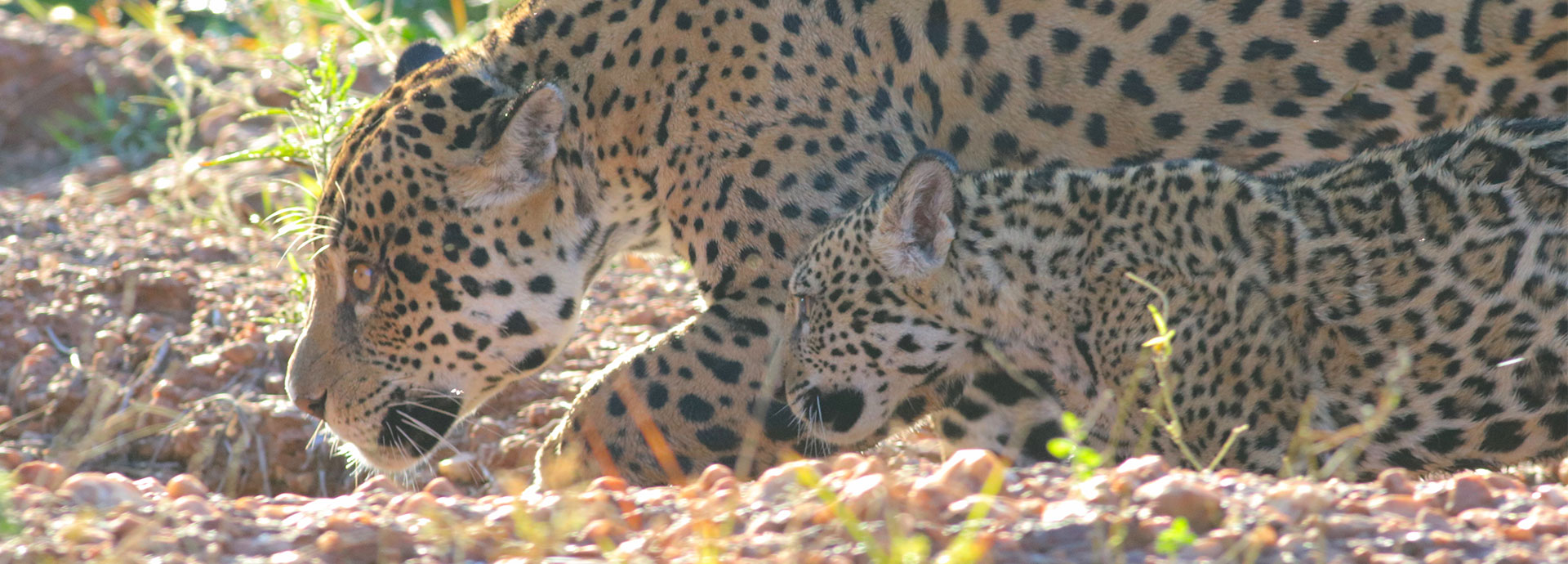
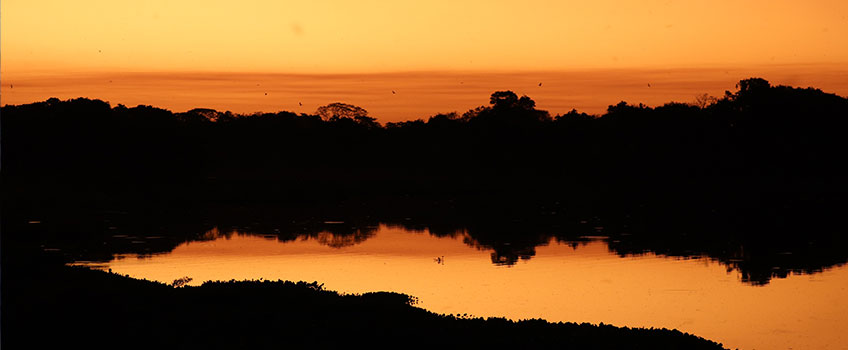 Travelling from Australia to Brazil is an extraordinary shock to the senses and nowhere more so than the Pantanal – the biggest inland delta in the world. Near the northern end of the Transpantaneira, a highway like no other, is Araras Eco Lodge where we had our first taste of this huge and remarkable ecosystem and fascinating culture. We began to absorb its sights and sounds on walks and game drives, and it was on horseback that we spied our first jaguar footprint…
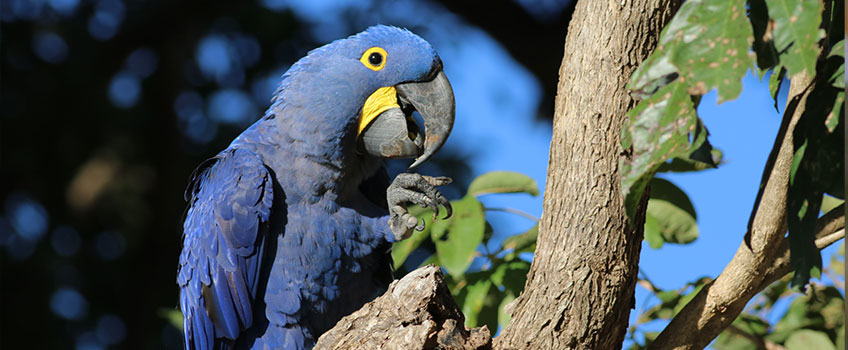
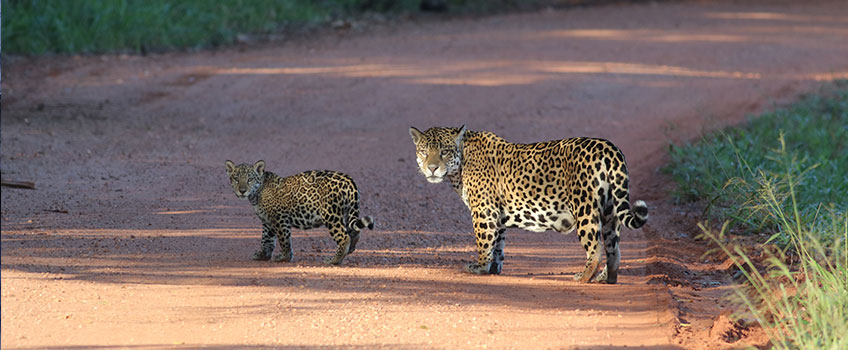
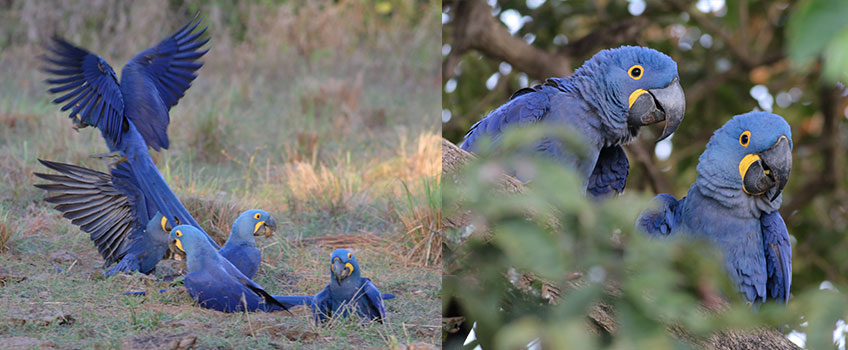
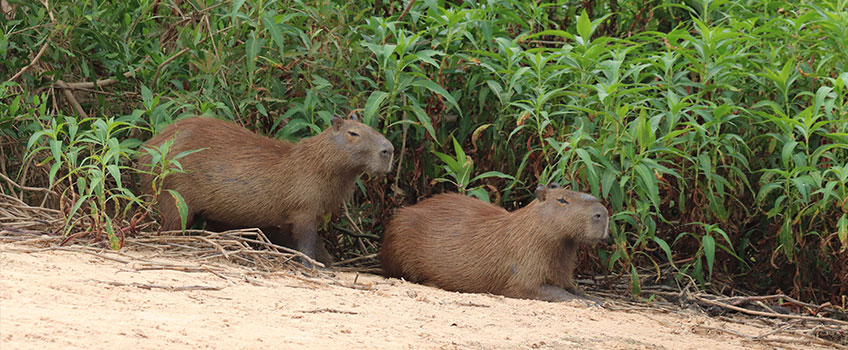
Although the aim of our journey was primarily to see jaguars in the wild, the array of additional wildlife was astounding. There were caiman everywhere, including on the paths at the lodge, plus rheas, capybara, coatis, howler and capuchin monkeys, iguana and foxes, as well as the magnificent hyacinth macaw (the world’s largest parrot), water birds, raptors and owls galore.
Travelling from Australia to Brazil is an extraordinary shock to the senses and nowhere more so than the Pantanal – the biggest inland delta in the world. Near the northern end of the Transpantaneira, a highway like no other, is Araras Eco Lodge where we had our first taste of this huge and remarkable ecosystem and fascinating culture. We began to absorb its sights and sounds on walks and game drives, and it was on horseback that we spied our first jaguar footprint…
Although the aim of our journey was primarily to see jaguars in the wild, the array of additional wildlife was astounding. There were caiman everywhere, including on the paths at the lodge, plus rheas, capybara, coatis, howler and capuchin monkeys, iguana and foxes, as well as the magnificent hyacinth macaw (the world’s largest parrot), water birds, raptors and owls galore.
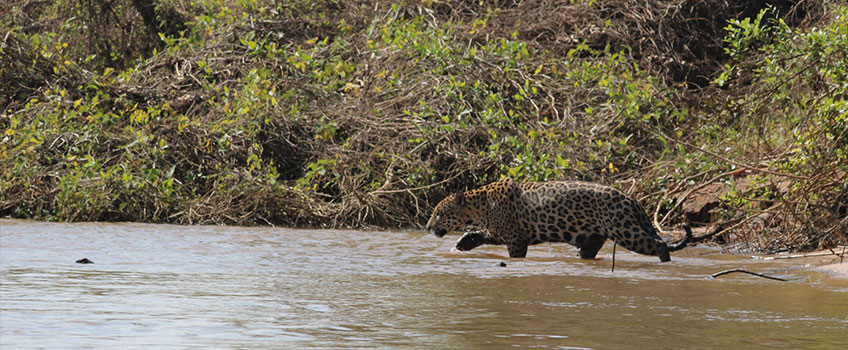
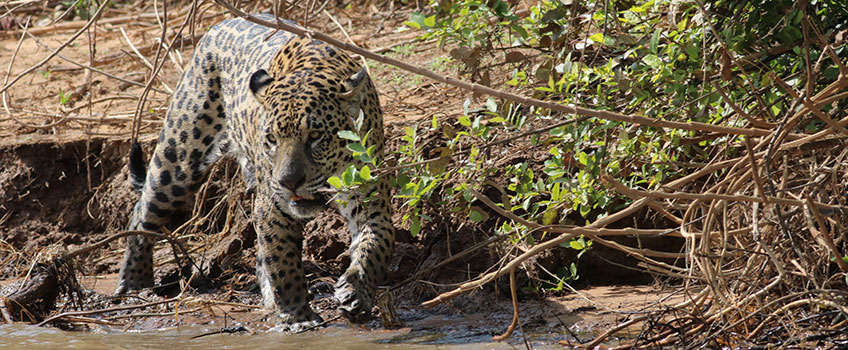
 Our second destination, Porto Jofre at the southern end of the Transpantaneira, was the first place we realistically expected to see jaguars. Two days on a boat on the big Cuiabá River and its many channels and lagoons yielded an extraordinary eight individual jaguar sightings! The highlight was a lactating female swimming across the wide river and leaping up the two-metre bank in a single bound – so fast that my camera-ready husband only caught her bottom half on film!
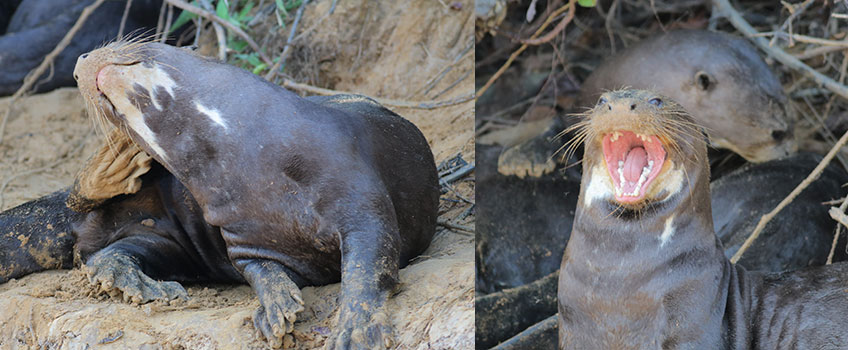
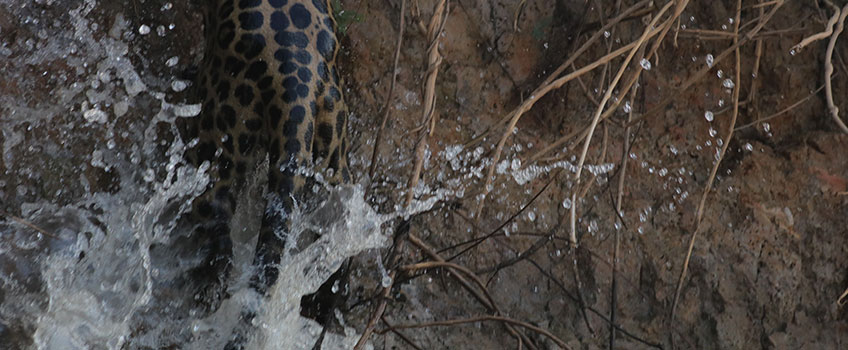 The giant otters were such a treat too, so busy, squirmy, chatty and like torpedoes in the water!
 Travelling from the northern Pantanal to the southern part was circuitous and time-consuming, but oh, soooo worth it. Note to self: next time, splash out and book the private charter plane!
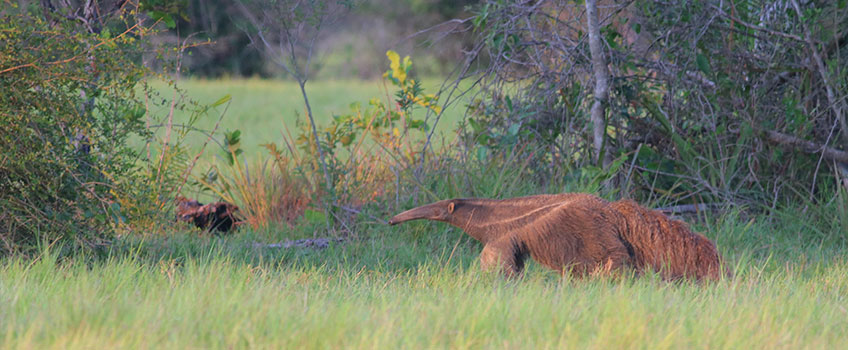
 There are just no words to describe this experience. Peccaries abounded, and we sighted brocket (deer) and were very lucky to see the very special giant anteater.
 That afternoon was spent with the inspiring researchers working on the Hyacinth Macaw Project, assisting them as they abseiled up trees to check nest boxes, and recording sightings of these striking and iconic birds. This might have been a jaguar safari, but we saw so much more besides!
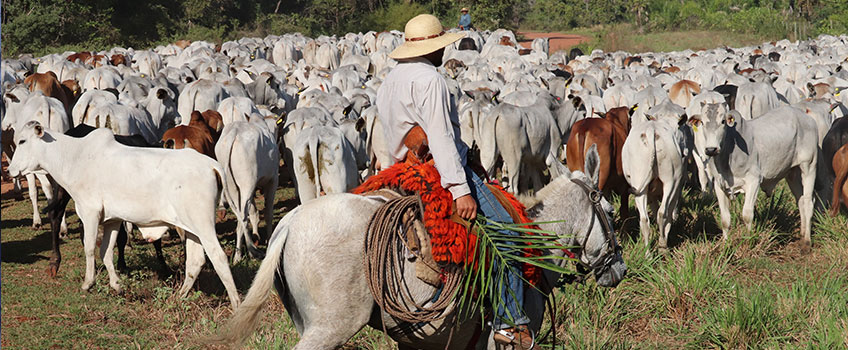
 We’d hoped to experience an iconic cattle drive on the Transpantaneira highway, so were thrilled to find ourselves in the middle of a one during our morning with Onçafari! The cowboys on their special Pantaneira horses with brightly coloured blankets under the saddles, using palm fronds to guide the herd, was a stirring and colourful sight.
 Working with local communities is key to wildlife conservation everywhere. When Onçafari began, they conducted research with the Pantanal local communities and discovered that people believed that 30 per cent of stock losses were due to jaguar attacks. The researchers enrolled the cattle ranchers into reporting dead stock so the cause of death could be analysed. These communities now understand that just 1-2 per cent of livestock deaths are actually caused by jaguars, resulting in a significant decrease in jaguar deaths by shooting. Onçafari is also purchasing land to provide habitat and wildlife ‘corridors’ to facilitate natural movement and pairing/breeding of jaguars.
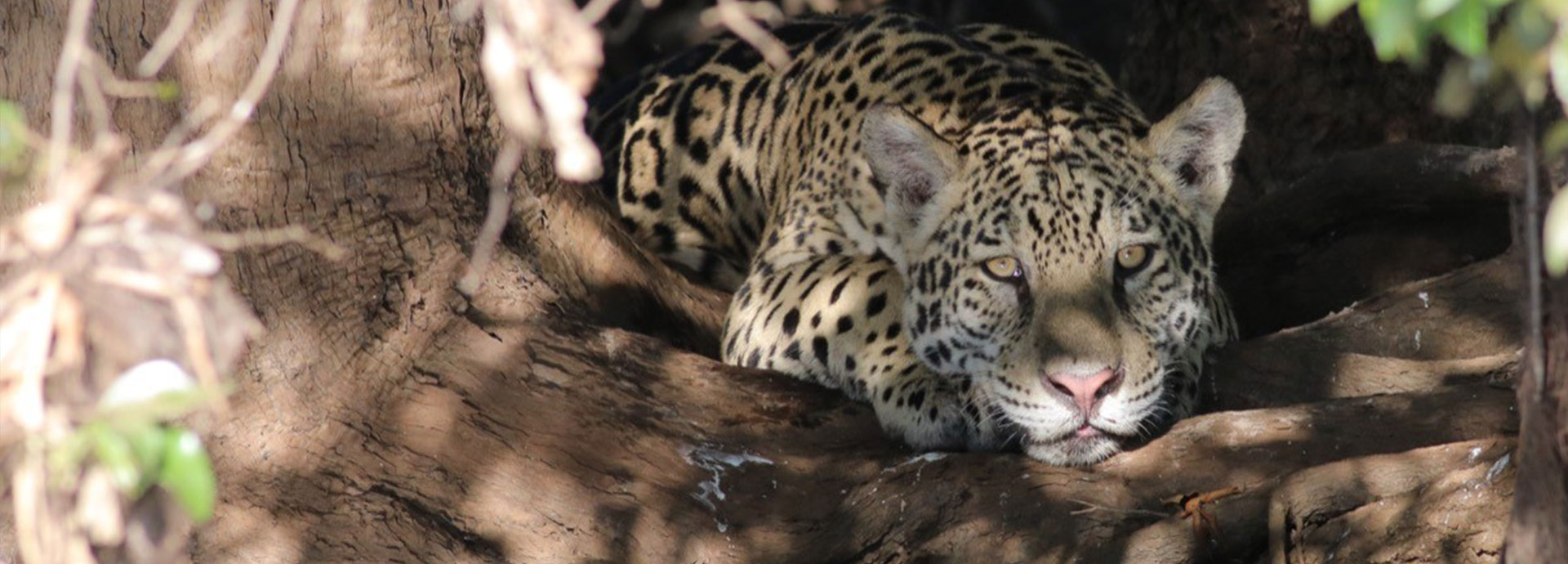
Onçafari’s habituation of jaguars (to vehicles and people on jaguar safaris) has resulted in a significant increase in the percentage of tourists seeing these big cats whilst on safari: 16 per cent in 2103 and 99 per cent in 2021. Successful tourism brings income to the Pantanal and the local communities benefit. I loved the family tree – seeing where jaguars we’d seen on the previous day at Casa Caiman fitted into the local population and Onçafari’s research.
Working with local communities is key to wildlife conservation everywhere. When Onçafari began, they conducted research with the Pantanal local communities and discovered that people believed that 30 per cent of stock losses were due to jaguar attacks. The researchers enrolled the cattle ranchers into reporting dead stock so the cause of death could be analysed. These communities now understand that just 1-2 per cent of livestock deaths are actually caused by jaguars, resulting in a significant decrease in jaguar deaths by shooting. Onçafari is also purchasing land to provide habitat and wildlife ‘corridors’ to facilitate natural movement and pairing/breeding of jaguars.
Onçafari’s habituation of jaguars (to vehicles and people on jaguar safaris) has resulted in a significant increase in the percentage of tourists seeing these big cats whilst on safari: 16 per cent in 2103 and 99 per cent in 2021. Successful tourism brings income to the Pantanal and the local communities benefit. I loved the family tree – seeing where jaguars we’d seen on the previous day at Casa Caiman fitted into the local population and Onçafari’s research.
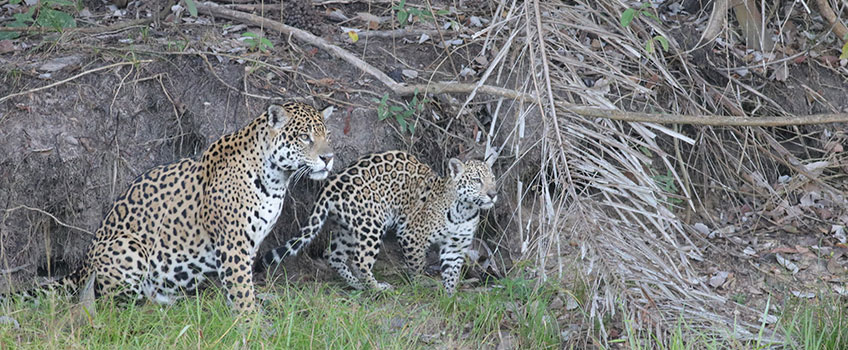 As we were boarding the Onçafari game drive vehicle to head out again, the manager of the project came out to introduce herself. She let us know that they’d called in a vet to attend to Tupã, one of the collared males. He’d been attacked by the unreceptive Fera (aforementioned rewilded female) two weeks before. The Casa Caiman guides and Onçafari researchers were concerned that he was not able to clean his neck/jaw wounds properly because of the collar.
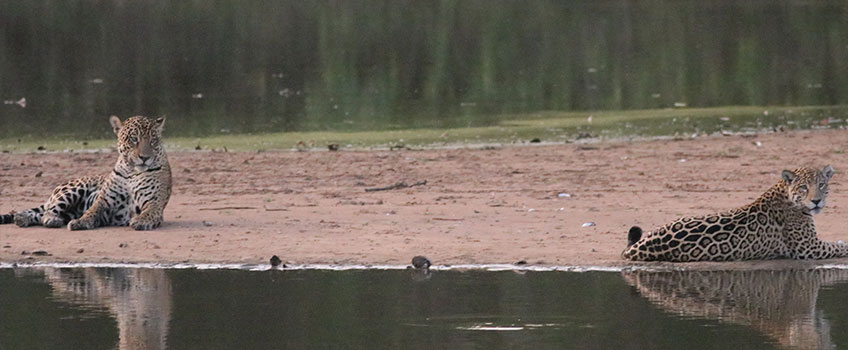
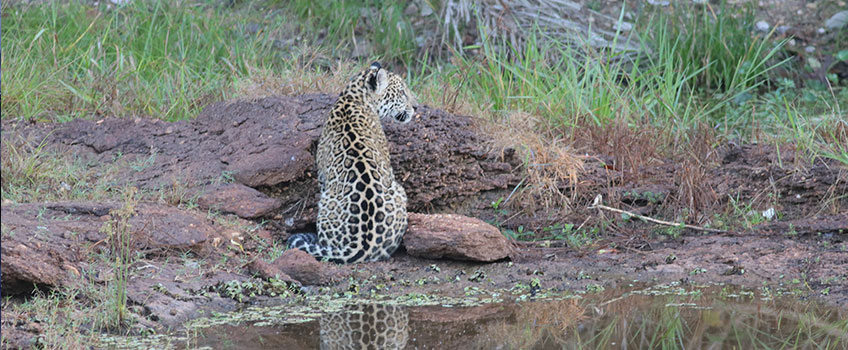
As the sun set, our Onçafari guide located a male and a female jaguar on the edge of a waterhole. Given that jaguars are solitary, we knew we’d found a mating pair! What ensued was unusual – the male Bodalo seemed uninterested and was resisting Aracy’s advances, walking off repeatedly whilst she followed… what a special sighting!
As we were boarding the Onçafari game drive vehicle to head out again, the manager of the project came out to introduce herself. She let us know that they’d called in a vet to attend to Tupã, one of the collared males. He’d been attacked by the unreceptive Fera (aforementioned rewilded female) two weeks before. The Casa Caiman guides and Onçafari researchers were concerned that he was not able to clean his neck/jaw wounds properly because of the collar.
As the sun set, our Onçafari guide located a male and a female jaguar on the edge of a waterhole. Given that jaguars are solitary, we knew we’d found a mating pair! What ensued was unusual – the male Bodalo seemed uninterested and was resisting Aracy’s advances, walking off repeatedly whilst she followed… what a special sighting!
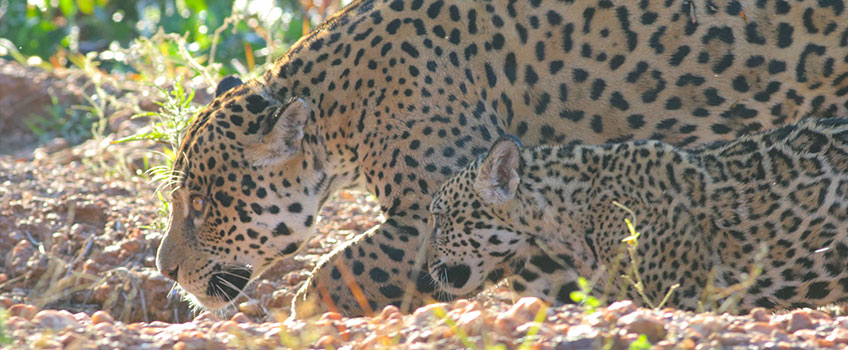 Weighing in around 120kgs, Tupã is 8-9 years old and has been part of the Onçafari research for many years – this was his third radio tracking collar. He has a reputation as a fighter – this was not the first time a vet had been called in for him! The project staff decided not to replace his collar: his genes are well-represented in the area and he’s done his bit for jaguar research. His age is showing: Tupã has lost all his small front teeth in the bottom jaw and most of the small ones at the top front too, and his huge canines are well-worn from use.
The vet explained that they do not use antibiotics in the Pantanal because of the risk of introducing antibiotic resistance into the food chain. He injected anti-inflammatory and anti-worm drugs and drained the wounds by turning Tupã over onto his other side (that took three large strong men!).
There was just one more task – the vet took a urine sample. I never imagined that I’d stand next to such a huge and beautiful wild cat watching a vet insert a catheter into its (tiny) penis!
Weighing in around 120kgs, Tupã is 8-9 years old and has been part of the Onçafari research for many years – this was his third radio tracking collar. He has a reputation as a fighter – this was not the first time a vet had been called in for him! The project staff decided not to replace his collar: his genes are well-represented in the area and he’s done his bit for jaguar research. His age is showing: Tupã has lost all his small front teeth in the bottom jaw and most of the small ones at the top front too, and his huge canines are well-worn from use.
The vet explained that they do not use antibiotics in the Pantanal because of the risk of introducing antibiotic resistance into the food chain. He injected anti-inflammatory and anti-worm drugs and drained the wounds by turning Tupã over onto his other side (that took three large strong men!).
There was just one more task – the vet took a urine sample. I never imagined that I’d stand next to such a huge and beautiful wild cat watching a vet insert a catheter into its (tiny) penis!
 All images and words courtesy of Margaret Jones, with thanks.